

WELDING MACHINES
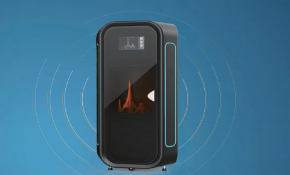
FIBER LASER WELDING MACHINE
Advanced, High-Speed & Precision Metal Welding Technology
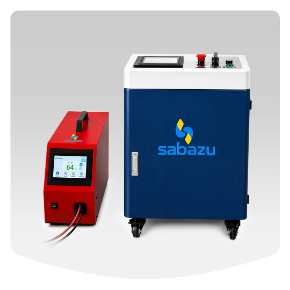
The SABAZU Fiber Laser Welding Machine is an advanced metal joining solution designed to deliver high welding speed, excellent precision, deep penetration and minimal thermal distortion. It uses a high-energy fiber laser source to generate a concentrated laser beam, which is transmitted through a flexible fiber-optic cable and focused precisely onto the welding area.
Unlike conventional MIG, TIG and arc welding processes that use an electrical arc as the primary heat source, fiber laser welding uses concentrated optical energy to melt and fuse the workpieces. The highly focused beam produces a small and controlled molten pool that rapidly solidifies to form a strong, clean and precise weld joint.
Fiber laser welding is particularly suitable for stainless steel, carbon steel, mild steel, galvanized steel, aluminum, copper and other commonly used engineering metals, subject to appropriate process parameters and material conditions.
WORKING PRINCIPLE
The fiber laser welding process operates through a series of precisely controlled stages:
1. Laser Generation
The fiber laser source converts electrical energy into a high-intensity laser beam. Industrial fiber lasers commonly operate around the 1060–1080 nm wavelength range, providing a highly concentrated energy source suitable for metal processing.
2. Fiber-Optic Beam Transmission
The generated laser beam is transmitted from the laser source to the welding head through a flexible optical fiber cable. This arrangement provides flexibility in positioning the welding head and makes the technology suitable for handheld, CNC, robotic and automated welding systems.
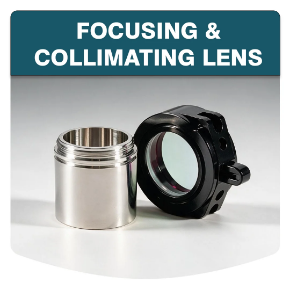
3. Beam Collimation & Focusing
Inside the welding head, optical components collimate and focus the laser beam onto the workpiece. The focused beam produces an extremely high energy density at the welding point.
4. Formation of the Molten Pool
When the concentrated laser beam reaches the metal surface, the material rapidly absorbs the laser energy and melts at the joint. Depending on power, speed, material and joint configuration, the process can produce either conduction-mode or deeper keyhole-type welding.
5. Rapid Solidification
As the welding head moves along the joint, the molten metal travels with the process and rapidly solidifies behind the laser beam. This creates a narrow, strong and aesthetically clean weld seam with a relatively small heat-affected zone.
6. Shielding Gas Protection
Argon or nitrogen can be supplied around the welding zone to protect the molten pool from atmospheric contamination and oxidation. The correct shielding gas and flow rate depend on the material and application.
MAIN COMPONENTS
A typical SABAZU Fiber Laser Welding Machine consists of:
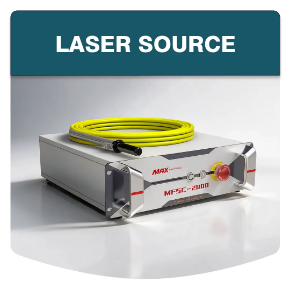
Fiber Laser Source
The heart of the system, generating the high-power laser beam required for welding.
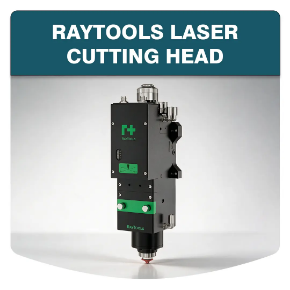
Laser Welding Head
The welding head contains the optical components used to deliver, focus and direct the laser beam onto the workpiece. Depending on configuration, it can incorporate beam wobbling/scanning functions for improved seam coverage and gap bridging.
Fiber-Optic Cable
A flexible optical transmission system that carries the laser beam from the source to the welding head with high efficiency.
Control System
The digital control system allows the operator to adjust and control important welding parameters such as laser power, welding speed, wobble width, frequency and other process settings.
Wire Feeder
An optional or integrated wire-feeding system can continuously supply filler wire when additional material is required to bridge gaps or achieve the desired weld profile.
Cooling System
The cooling system maintains the required operating temperature of the laser source and other heat-generating components. Depending on machine design and laser power, systems may use air cooling or industrial water cooling.
Gas Supply System
Provides shielding gas such as argon or nitrogen to protect the weld pool during operation.
Safety System
Industrial laser welding equipment should incorporate appropriate safety measures such as protective enclosures, interlocks, beam-emission controls and suitable operator protection according to the machine configuration and applicable laser-safety requirements.
KEY FEATURES
High Welding Precision
The highly focused laser beam enables precise control of the welding area and produces narrow, accurate weld seams. This makes fiber laser welding suitable for components requiring a clean and controlled finish.
High Welding Speed
Fiber laser welding can achieve substantially higher travel speeds than many conventional arc-welding processes, particularly for suitable thin and medium-gauge applications. Actual welding speed depends on laser power, material, thickness, joint design and process parameters.
Deep & Controlled Penetration
The high power density of the laser enables deep penetration with a narrow weld profile. Correct power and speed selection are essential to obtain the required penetration without excessive heat input.
Low Heat Input
Because laser energy is concentrated into a small area, the surrounding material experiences less heat exposure compared with many conventional welding processes. This helps reduce warping and thermal distortion.
Excellent Weld Appearance
Fiber laser welding can produce smooth, narrow and visually attractive weld seams, often reducing the amount of grinding and finishing required.
Reduced Spatter
With correctly selected parameters, fiber laser welding can provide a cleaner welding process with significantly reduced spatter compared with many conventional arc-welding processes.
Flexible Operation
The optical fiber delivery system allows the welding head to be positioned flexibly, making the technology suitable for handheld and automated configurations.
Automation Ready
Fiber laser welding systems can be integrated with CNC positioning systems, robotic arms, rotary tables and automated production lines.
Lower Post-Weld Processing
The clean weld profile and reduced thermal distortion can reduce grinding, polishing, straightening and other secondary operations.
WELDING MODES
Continuous Wave Welding
Continuous-wave laser operation provides a continuous laser output and is widely used for production welding applications requiring consistent heat input and high productivity.
Wobble / Scanning Welding
A wobbling or scanning welding head moves the laser beam in a controlled pattern rather than maintaining a single stationary point. This can increase the effective weld width and improve tolerance to small joint gaps.
Some industrial welding systems provide adjustable wobble width and frequency depending on the welding head and controller configuration.
MATERIALS THAT CAN BE WELDED
The SABAZU Fiber Laser Welding Machine can be configured for a wide range of metallic materials, including:
- Stainless Steel
- Carbon Steel
- Mild Steel
- Galvanized Steel
- Aluminum
- Copper
- Brass
- Titanium
- Nickel Alloys
- Other suitable engineering metals
Important: Welding performance varies according to laser power, material grade, thickness, surface condition, joint configuration, shielding gas, focal position and welding speed. Actual production parameters should be established through application testing.
COMMON APPLICATIONS
Sheet Metal Fabrication
Ideal for welding stainless-steel and mild-steel sheet-metal components with high speed and low distortion.
Stainless-Steel Products
Suitable for cabinets, enclosures, kitchen equipment, tanks, frames, furniture and architectural components.
Automotive Components
Used for selected automotive components, brackets, structural parts, transmission-related components and other precision metal assemblies.
Electrical & Electronics
Suitable for selected housings, electrical cabinets, battery-related components and precision metal parts.
Aerospace Components
The high precision and controlled heat input of laser welding make it suitable for selected aerospace manufacturing and fabrication applications.
Medical Equipment
Can be used for precision welding of suitable medical-device components where controlled heat input and clean weld quality are important.
Kitchen & Commercial Equipment
Suitable for stainless-steel kitchen equipment, counters, cabinets, sinks, frames and fabrication components.
Jewelry & Fine Metal Work
Lower-power configurations can be used for precision welding and fine metalworking applications.
Machinery Manufacturing
Suitable for frames, brackets, machine components, enclosures and fabricated assemblies.
ENERGY & PRODUCTION EFFICIENCY
Fiber laser welding concentrates energy directly into the welding zone. This can provide high process efficiency, fast travel speeds and reduced thermal impact on the surrounding material.
Higher productivity can result from:
- Faster welding speeds
- Reduced setup and processing time
- Lower heat distortion
- Reduced grinding and finishing
- Less material affected by heat
- Potential reduction in filler-wire consumption
- Easy integration with automation
Actual productivity and energy savings depend on the material, thickness, laser power, joint design, welding parameters and production environment.
COOLING SYSTEM
The cooling system is an important part of a fiber laser welding machine.
For higher-power systems, an industrial water chiller can circulate controlled-temperature coolant through the appropriate cooling circuits. Maintaining stable operating temperatures helps protect the laser source and other heat-sensitive components and supports consistent machine performance.
Depending on the machine configuration and laser power, the system may use:
- Air Cooling
- Water Cooling
- Industrial Laser Chiller
OPTIONAL WIRE FEEDING
For applications where the joint has a small gap or additional weld material is required, a wire feeder can continuously introduce filler wire into the molten pool.
Typical benefits include:
- Improved gap bridging
- Increased weld reinforcement
- Better control of weld profile
- Improved flexibility for different joint designs
The appropriate wire diameter and feeding parameters depend on the material, thickness and welding application.
SAFETY
Fiber laser welding systems use high-power laser radiation and require appropriate safety controls.
Depending on the machine configuration, safety provisions can include:
- Laser-safe enclosure
- Door interlock
- Emergency stop
- Laser emission control
- Protective laser eyewear where appropriate
- Welding helmet/protective equipment
- Proper grounding
- Fume extraction/ventilation
- Controlled operating area
- Operator training
For enclosed industrial systems, safety interlocks can be designed to stop laser emission when the enclosure is opened.
Never operate a high-power fiber laser welding system without following the manufacturer's safety instructions and applicable laser-safety requirements.
WHY CHOOSE SABAZU FIBER LASER WELDING MACHINE?
The SABAZU Fiber Laser Welding Machine is designed to combine:
High Precision + High Speed + Low Distortion + Clean Welds + Flexible Operation + Automation Capability
It provides a modern alternative to conventional welding technologies for manufacturers looking to improve production efficiency, weld consistency and finishing quality.
With configurations available for different laser power requirements, cooling systems, welding heads and wire-feeding options, the machine can be adapted to applications ranging from general fabrication to precision industrial welding.
IN SIMPLE TERMS
Fiber laser welding uses a highly concentrated laser beam instead of a conventional electric arc to join metal.
The laser beam travels through a flexible optical fiber, reaches the welding head and is focused onto the joint. The concentrated energy rapidly melts the metal, creating a controlled molten pool. As the beam moves forward, the molten metal cools and solidifies to form a strong weld.
The result is a fast, precise, clean and low-distortion welding process that is increasingly used in modern metal fabrication and industrial manufacturing.


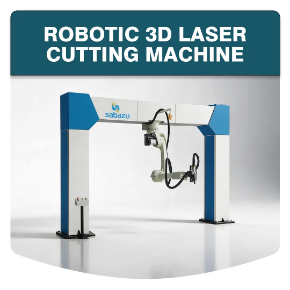
Robot-Integrated Fiber Laser Cutting System-SH RC 2000-6000

SABAZU SH_CRW Series Robotic Laser Welding System

LASER WELDING ROBOT

